DeepCARS Peer-Reviewed
Multicenter Staggered-Implementation Study in Secondary Hospitals Without an RRS
JournalDiagnostics (Basel)
Year2026
Citation16(11):1682

Contact the VUNO team anytime.
Explore real-world clinical cases from medical institutions in Korea and abroad that have adopted VUNO's medical AI solutions.
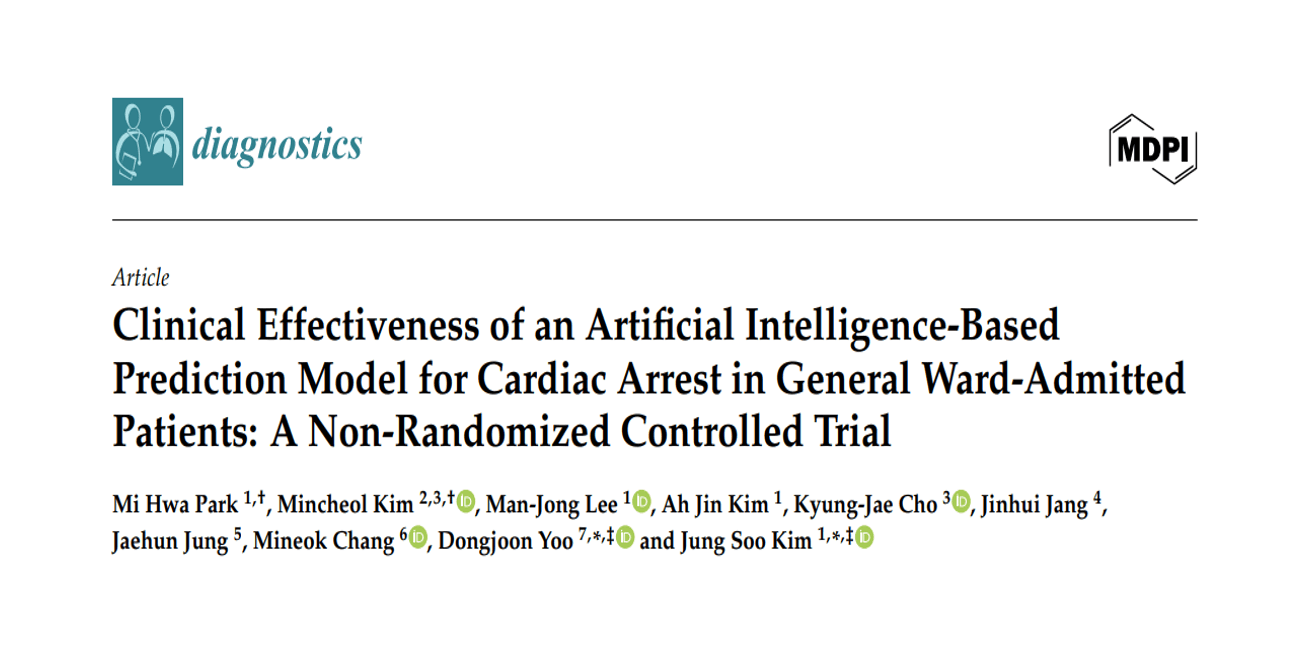
In DeepCARS' first large-scale prospective interventional study, the DeepCARS intervention group showed a 46% lower incidence of cardiac arrest and 35% lower overall mortality than the control group. The study followed a total of 36,797 patients over one year; the intervention group received clinical reassessment or treatment within 24 hours of an alarm, while the control group received no additional response to alarms.
The study confirmed that patient outcomes can improve when clinicians respond in a timely manner to DeepCARS alarms — while keeping the existing care system in place and without adding staff.
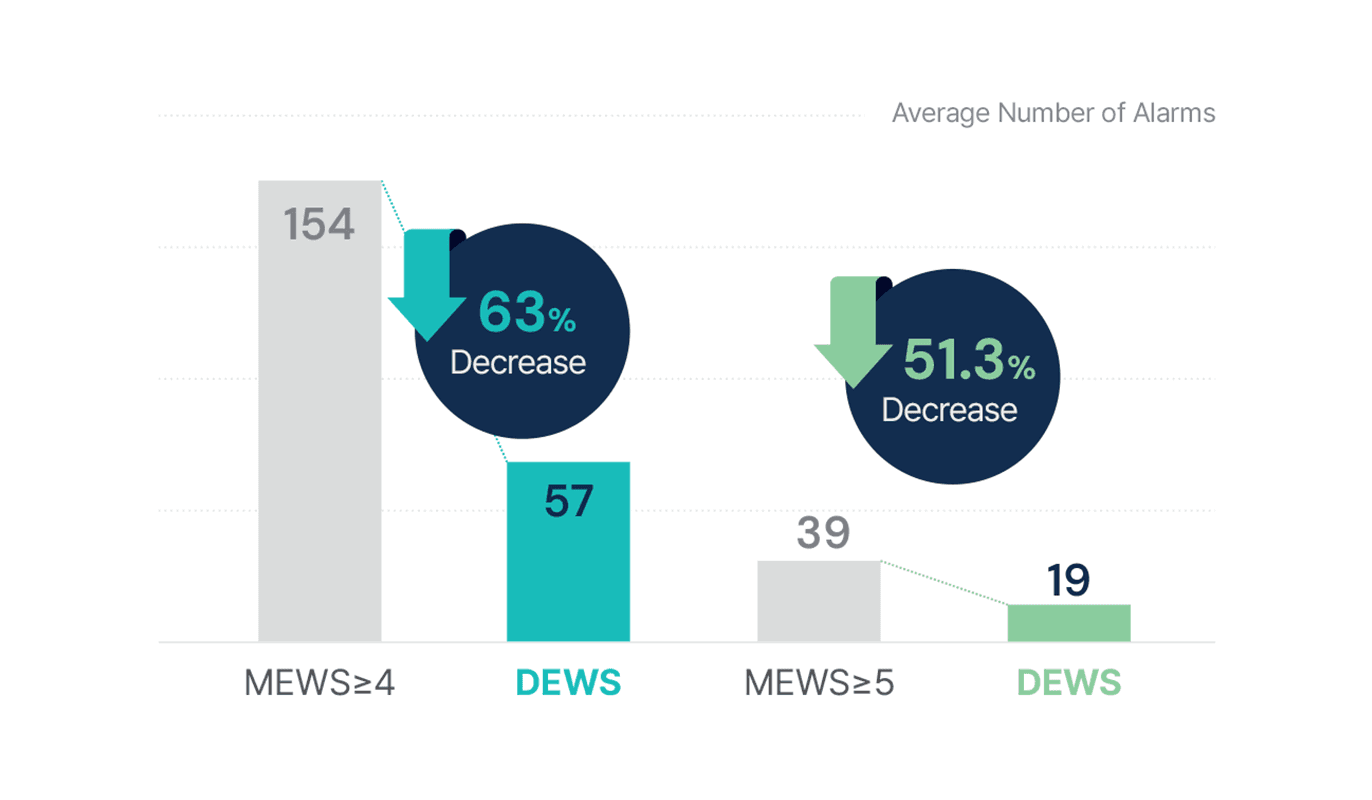
In a multicenter retrospective clinical study, the mean number of alarms (MACPD*) at the same sensitivity was 63% lower than with the conventional early warning score (MEWS).
*MACPD = Mean Alarm Counts per Day per 1,000 beds Lee YJ, et al. A multicentre validation study of the deep learning-based early warning score for predicting in-hospital cardiac arrest in patients admitted to general wards. Resuscitation. 2021;163:78-85. https://doi.org/10.1016/j.resuscitation.2021.04.013※ This was a multicenter retrospective study of the research-use algorithm of the deep learning-based early warning score (DEWS). DEWS is an extended version of the original model developed in 2018, with diastolic blood pressure, age, and vital-sign measurement time added as variables; the results presented are values observed under the conditions of this study.
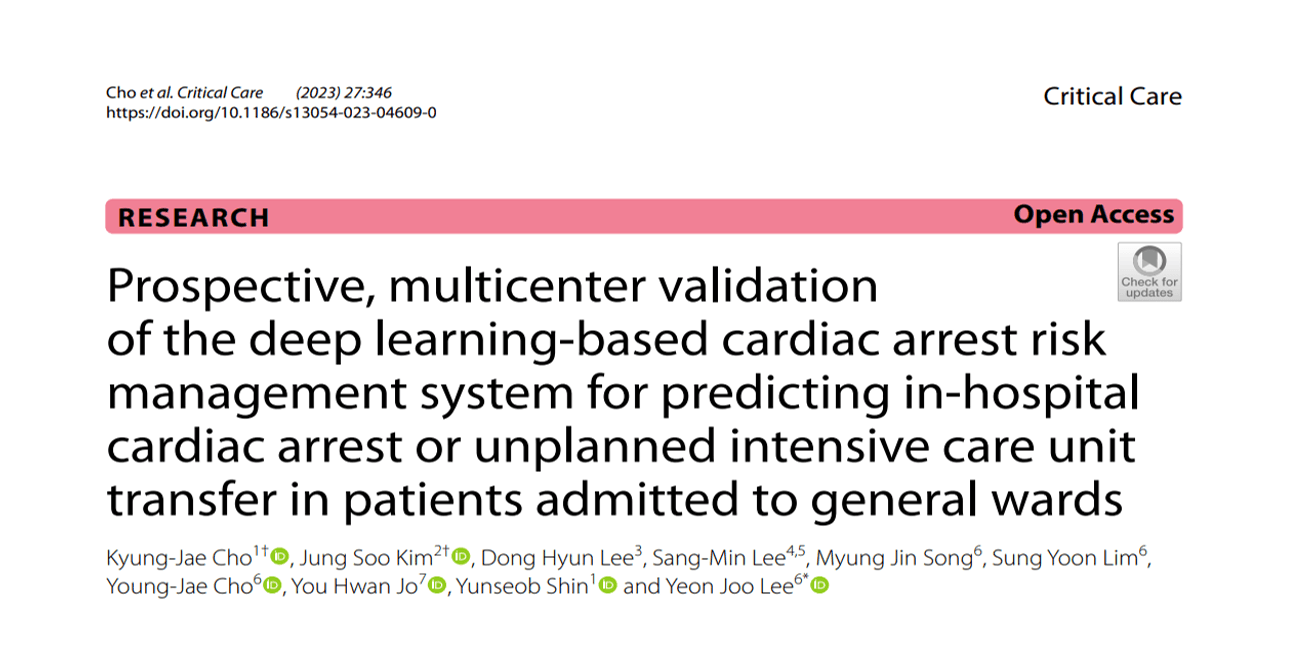
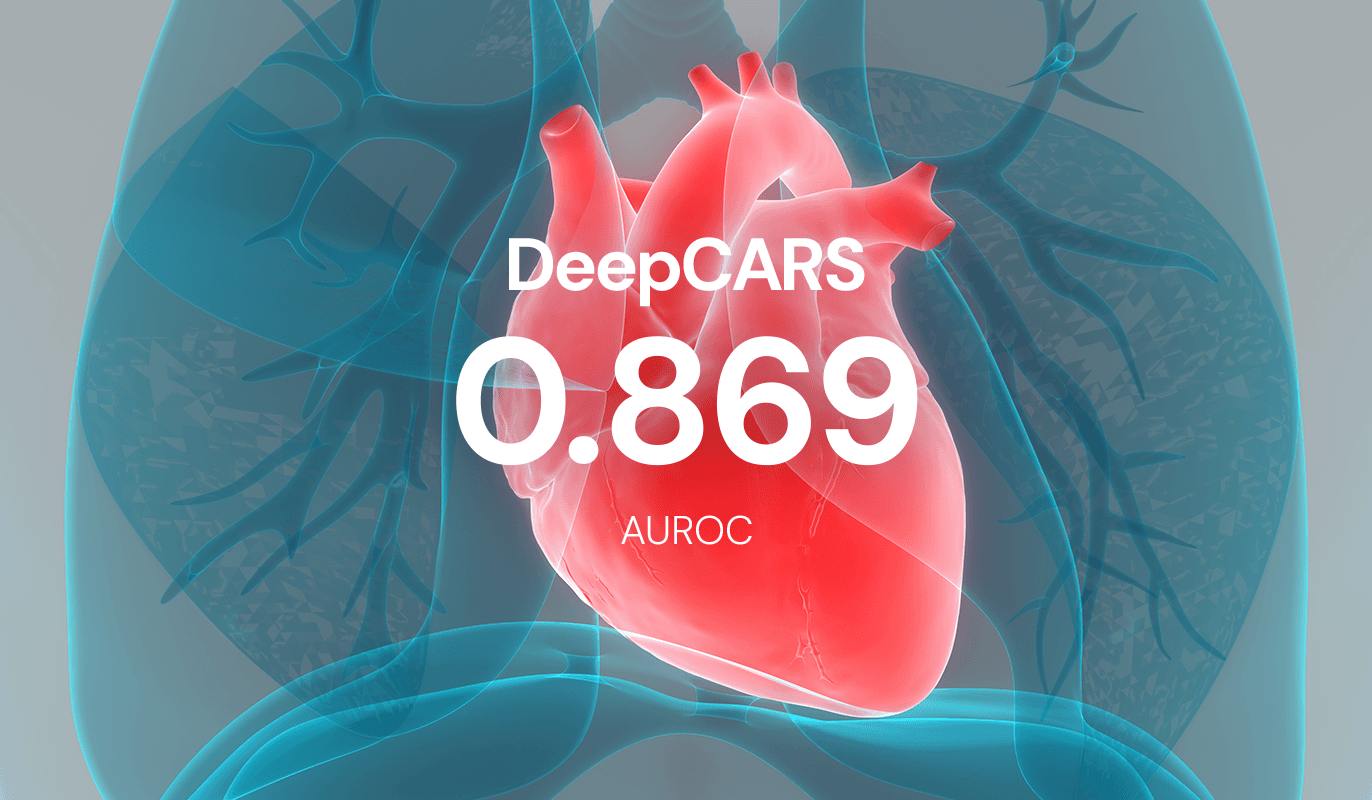
In a multicenter prospective study, performance in predicting cardiac arrest or unplanned ICU transfer within 24 hours in general-ward inpatients (AUROC*) was 0.869 — approximately 15%*** higher than the 0.756 of the conventional early warning score (MEWS**).
* AUROC = a metric for evaluating AI model performance, where 1.0 means perfect performance. **MEWS = Modified Early Warning System ***The improvement rate is the relative difference calculated from the AUROC for predicting cardiac arrest or unplanned ICU transfer reported in the paper (DeepCARS 0.869, MEWS 0.756). [(0.869-0.756)÷0.756×100≒14.9%] Cho KJ, et al. Prospective, multicenter validation of the deep learning-based cardiac arrest risk management system for predicting in-hospital cardiac arrest or unplanned intensive care unit transfer in patients admitted to general wards. Critical Care. 2023;27:346. https://doi.org/10.1186/s13054-023-04609-0
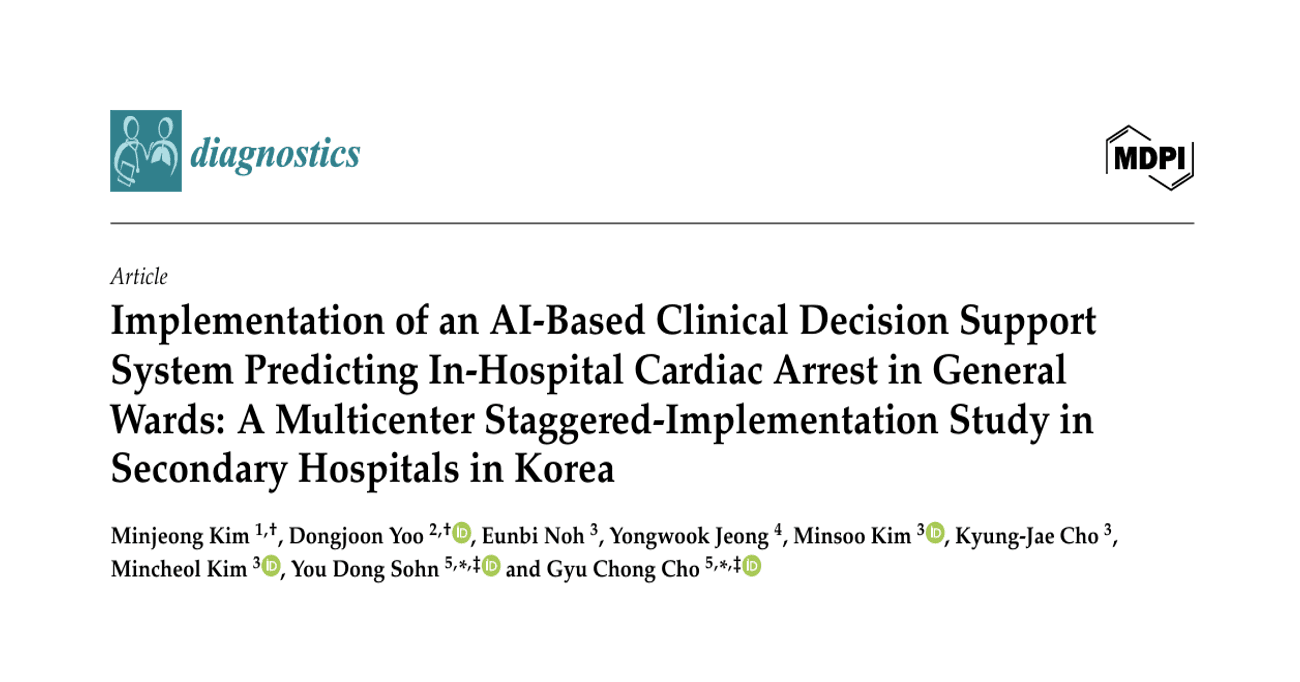
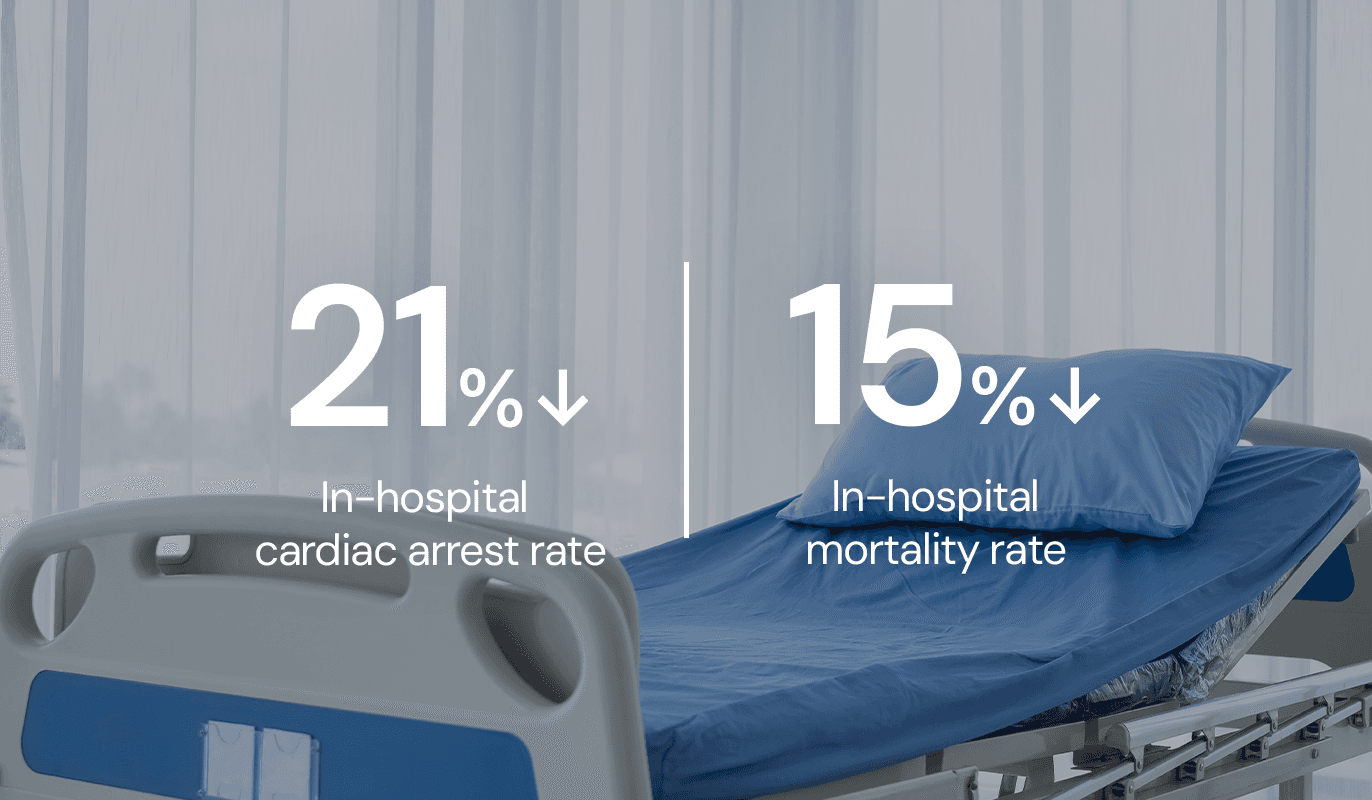
A study conducted at three Korean secondary hospitals without a rapid response team reported that DeepCARS adoption was associated with a 21% reduction in the incidence of in-hospital cardiac arrest and a 15% reduction in in-hospital mortality in general wards, compared with the pre-adoption period.
Kim M, et al. Implementation of an AI-Based Clinical Decision Support System Predicting In-Hospital Cardiac Arrest in General Wards: A Multicenter Staggered-Implementation Study in Secondary Hospitals in Korea. Diagnostics. 2026;16(11):1682. https://doi.org/10.3390/diagnostics16111682※ In this study, the product was used as an informational decision-support tool that provided risk scores to clinicians. Before implementation, general-ward clinicians received training on score interpretation and recommended responses; no mandatory response protocol based on the risk score was introduced. The observed outcomes may have been influenced by various factors, including clinicians’ clinical judgment and interventions and each institution’s care environment.
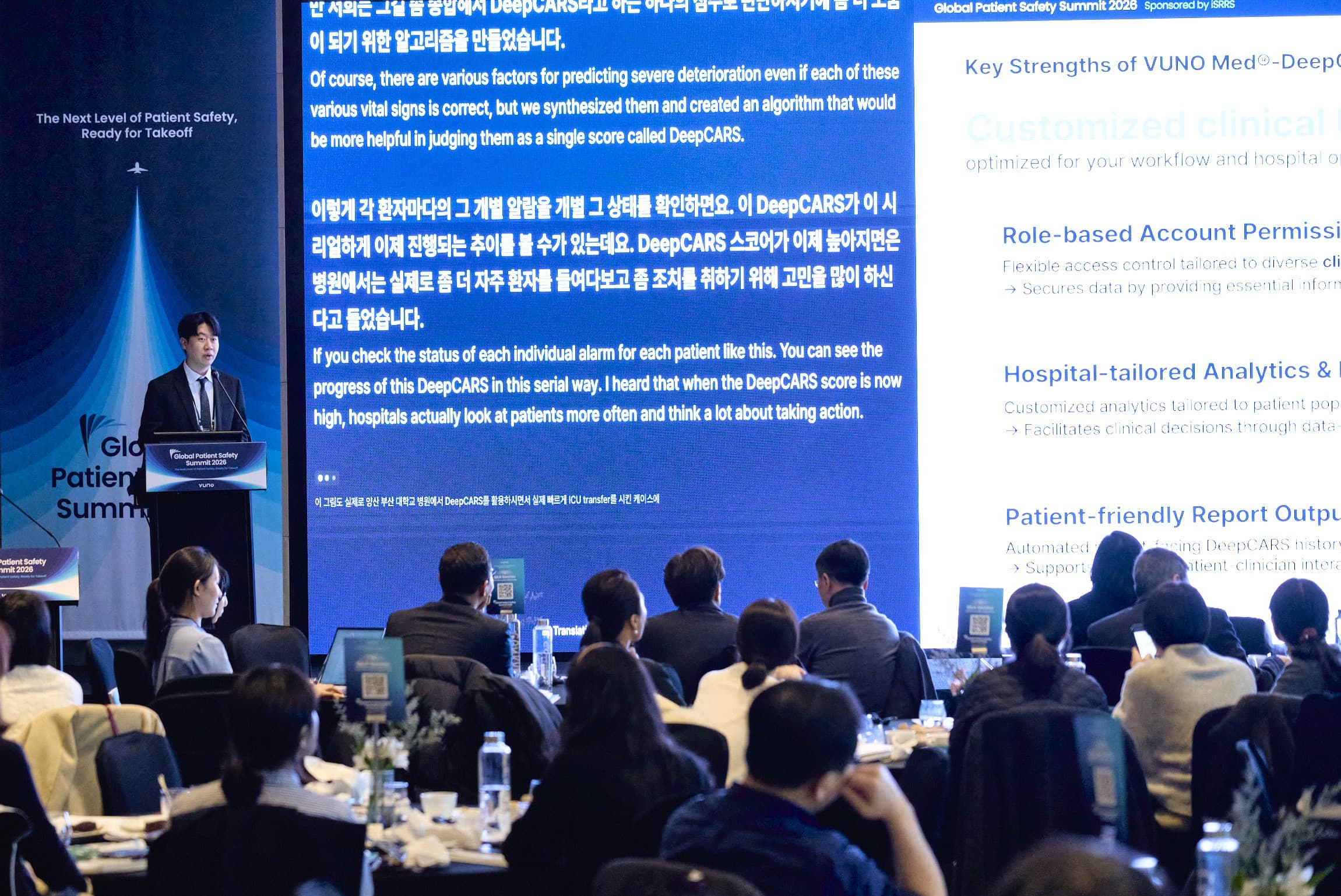
On February 7, 2026, in Yeouido, Seoul, VUNO hosted a global-scale patient safety symposium under the theme 'Next-Generation Patient Care: AI-Based EWS Across the Globe,' sharing clinical cases of AI-powered early warning systems from around the world. Officially sponsored by the International Society for Rapid Response Systems (iSRRS), it brought together critical-care specialists, digital-health researchers, government and public-institution officials, and international experts both online and offline.